

Procedure of Nadi Astrology
Nadi Astrology is an ancient system where your life’s details, written long ago by sages, are rediscovered through a sacred identification process. Using your thumb impression, the Nadi reader searches for the palm leaf that contains your personal life record. Once the correct leaf is found, it reveals insights about your past, present, future and the remedies meant for you.
The entire procedure is both precise and spiritual, based on the belief that your leaf will be found only at the right time.
How It Works
The Nadi Astrology procedure involves the following steps:
1. Identification of the Nadi Leaf
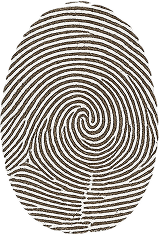
The seeker provides a thumb impression (right thumb for men, left thumb for women). This is critical because the palm leaves are cataloged based on unique thumbprint patterns rather than names or birthdays. Using the thumbprint, the Nadi astrologer identifies a set of bundles that could potentially contain your leaf. Each bundle is associated with a thumbprint category.
2. Reading of the Nadi Leaf
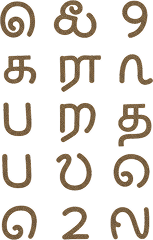
The reader begins reading statements from the leaves, you must answer truthfully to eliminate the incorrect leaves. There is no necessity to give any other personal details.After the leaf is identified, the astrologer reads the rest of the content. Nadi reader plays vital role in this process so choose a reader from reputable nadi family.
3. Predictions and Remedies
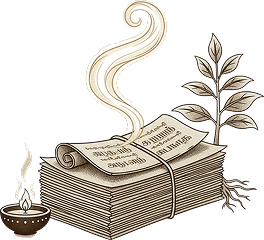
Nadi leaf contains personal details, outlines key past, present, and future events, highlights unique life challenges and opportunities, and offers tailored spiritual remedies.
How to Identify Your Leaf?
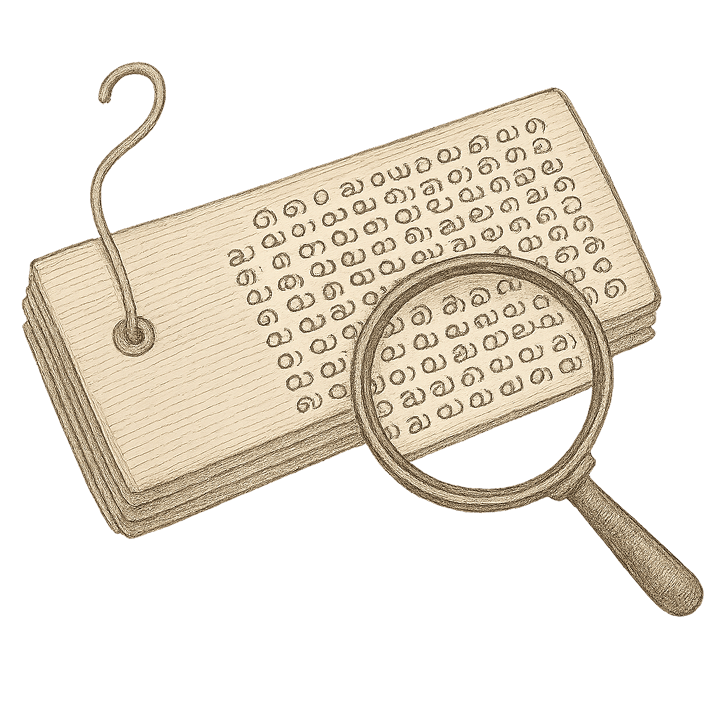
The Nadi manuscripts are written in an ancient Tamil script called Vattezhuthu. Each leaf supposedly belongs to a specific individual, and the process of finding one’s leaf is both systematic and mystical. A Nadi reader begins by taking the person’s thumbprint—right thumb for men and left for women.
Based on your thumbprint pattern, the Nadi reader selects a bundle of palm leaves from their archive. Each bundle contains leaves for people with similar thumbprints and general characteristics. The reader begins reading statements from the leaves, you must answer truthfully to eliminate the incorrect leaves. There is no neccessity to give any other personal details. After the leaf is identified, the astrologer reads the rest of the content. Nadi reader plays vital role in this process so choose a reader from reputable nadi family.
In Nadi belief, your leaf is waiting for you to come and claim it — it will be read only when the time is right, which is why the identification process is treated with reverence and care.
Does Everyone in the World have the Leaf?
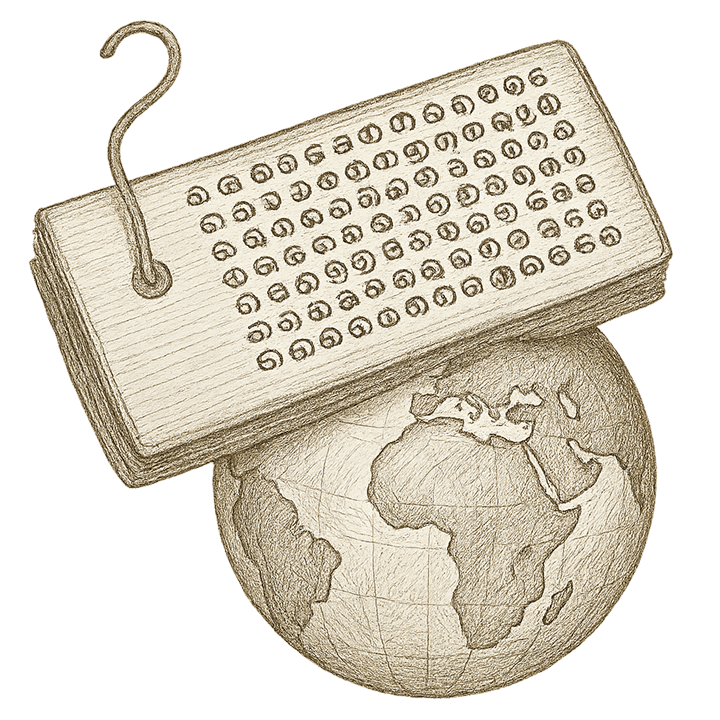
Nadi leaves are palm-leaf manuscripts said to be written thousands of years ago by ancient1 sages (like Kousika, Agastya, Bhrigu). It’s believed not everyone has a Nadi leaf — only certain souls destined to seek their reading. The leaves exist for those destined to seek them. have their details written, and they are said to “find” their leaf when the time is right.
The Nadi readers use a person’s thumb impression (or other identifiers) to search bundles of leaves to see if one matches. So, from a traditional perspective: Not everyone has a Nadi leaf. Only some are believed to have one, and those individuals will somehow be led to it.
How to Confirm your Leaf as Yours
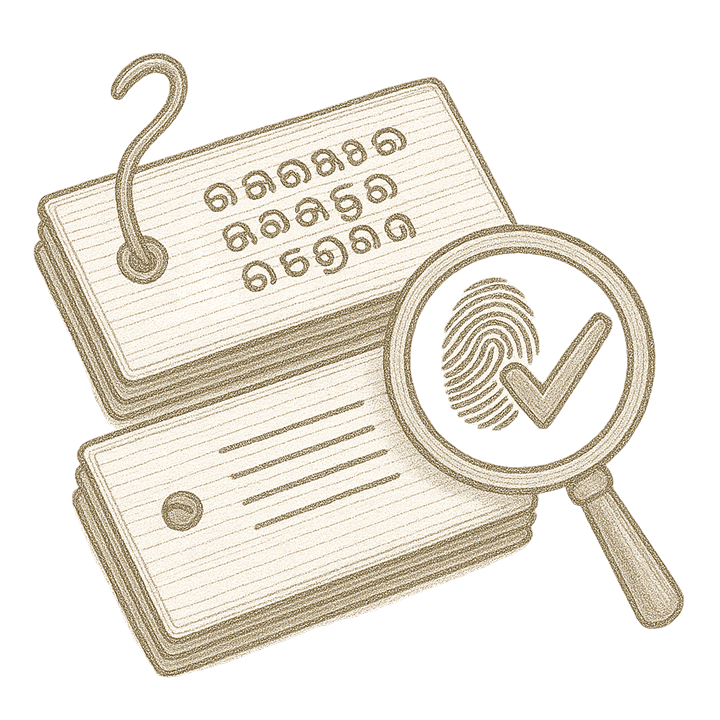
You provide your thumb impression (right for men, left for women) or sometimes your date/place of birth. The Nadi reader searches bundles of palm leaves that correspond to that pattern. The reader begins reading verses from potential leaves.
These verses will describe details like:
Your name (sometimes partially or indirectly). Your parents’ names. Siblings, spouse, children (if any), Key life events. If a detail doesn’t match, that leaf is put aside. If it matches consistently, the process continues until a perfect match is found. When one leaf repeatedly gives accurate personal details that you have not provided, it is declared as “your leaf.”
What if the Nadi is not Found? What Does it Mean?
Not everyone has a Nadi leaf written. If your leaf is not found, it usually means: the time has not yet come for you to receive it OR Your life record was not written by the sages.
Some traditions say the seeker will naturally be guided back at the right time if a leaf exists for them. The palm-leaf manuscripts are finite collections, preserved in certain libraries and families. Manuscripts may be lost, damaged, or incomplete, so even if one was written, it might not be accessible today. Sometimes, the matching process fails due to human error, missing bundles, or regional differences in the collections.
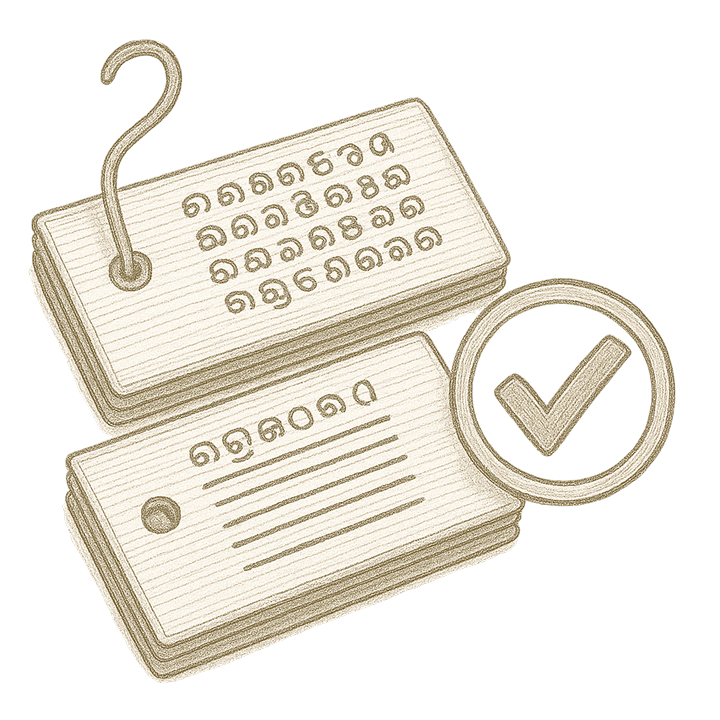
Accuracy of the Nadi Leaf
The nadi leaves are said to be written by ancient sages through divine vision like Kaushika, Agastya and Bhrigu. The information highly accurate and the main goal is to give guidance, point out life challenges like health, realationships, career, spiritual obstacles.
Aims to live more consciously and spiritually. Preservation issues (damaged leaves, copying errors) may affect the clarity of readings. The palm leaves are in ancient Tamil, Vattezhuthu, or Grantha script. Not every reader translates them equally well. Experienced readers understand both astrology and language, making the reading more precise. Authentic readers stick closely to the leaf; less scrupulous ones may improvise, which reduces accuracy. A genuine, spiritually aligned reader channels the sage’s guidance with clarity. If accuracy feels low, tradition says it may be due to the reader’s limitations, not the leaf itself.
Koushika Nadi Astrology
The Kaushika Nadi refers to a set of palm-leaf manuscripts in the Nadi astrology tradition, said to have been composed by Sage Kaushika (also called Koushika Maharishi).
According to tradition, Sage Kaushika wrote down life records and astrological predictions of people destined to consult them. These were inscribed on palm leaves, in Tamil (using Vattezhuthu or Grantha scripts). Each leaf is linked to a specific person — covering their past, present, and future, along with remedies for life’s challenges.
Unique Aspects of Kaushika Nadi
Kaushika Nadi is highly regarded for the accurate predictions and guidance. It often emphasizes karma, spiritual remedies, and rituals to resolve difficulties. The verses are written in poetic Tamil, with astrological details (planetary positions, doshas, pariharas).
In the Treta Yuga, the main sacred language was believed to be Sanskrit (Vedic Sanskrit). The Vedas, mantras, and knowledge of the rishis (including Sage Kaushika / Vishvamitra) were all expressed in Sanskrit. Since Kaushika is also remembered as Vishvamitra, the sage who revealed the Gayatri Mantra, his primary language of expression is considered Sanskrit.
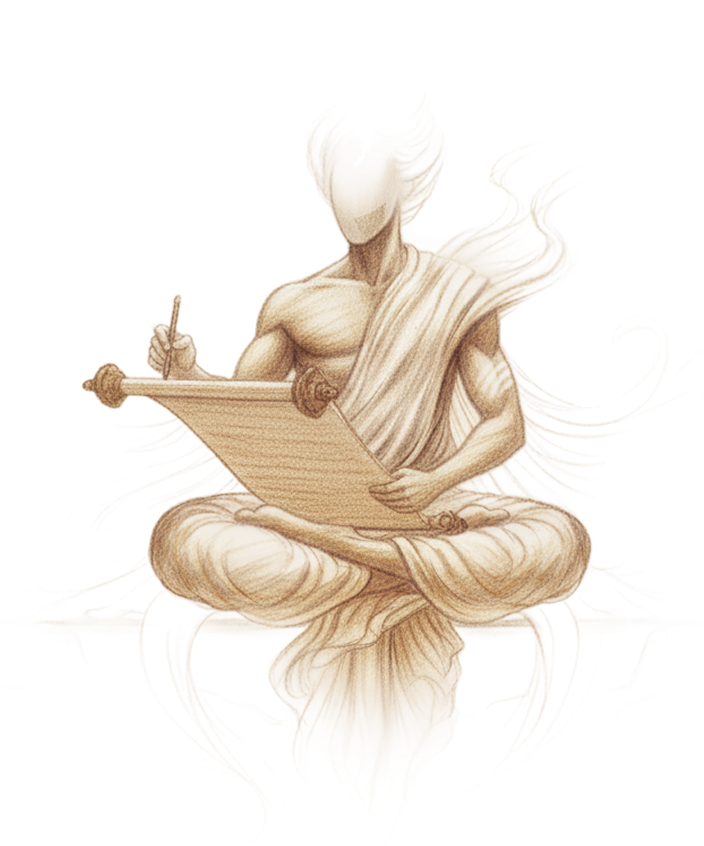
The Nadi palm-leaf manuscripts attributed to Kaushika were not written down during Treta Yuga itself. They were transcribed much later (medieval period onwards) into Tamil (using Vattezhuthu or Grantha script) or Grantha-script Sanskrit. So the leaves we see today preserve the tradition in Tamil + Sanskrit hybrid forms, but the original language of Kaushika in Treta Yuga is understood as Sanskrit.
Seek Your Answers
Every question holds a meaning. Connect with us to understand the patterns of your destiny and uncover what the stars reveal about your life.
Ask Your Question
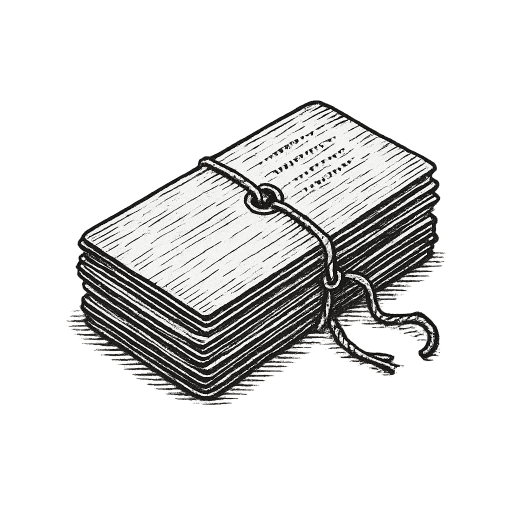
Meet Team Olilaayam
Behind every Nadi reading is a team devoted to preserving its sacred legacy. Team Olilaayam brings together experienced Nadi readers, translators, and spiritual guides who work with dedication and authenticity to connect each seeker with their destined palm leaf. Learn more about the people and purpose that make this divine journey possible.